Early childhood is one of the most important stages of brain development. During these early years, children are constantly learning, observing, and absorbing information from their surroundings. Preschool plays a vital role in shaping a child’s cognitive abilities by combining structured learning with engaging play activities. Through this balance of fun and education, preschool helps children strengthen their memory, improve thinking skills, and build a strong foundation for future learning.
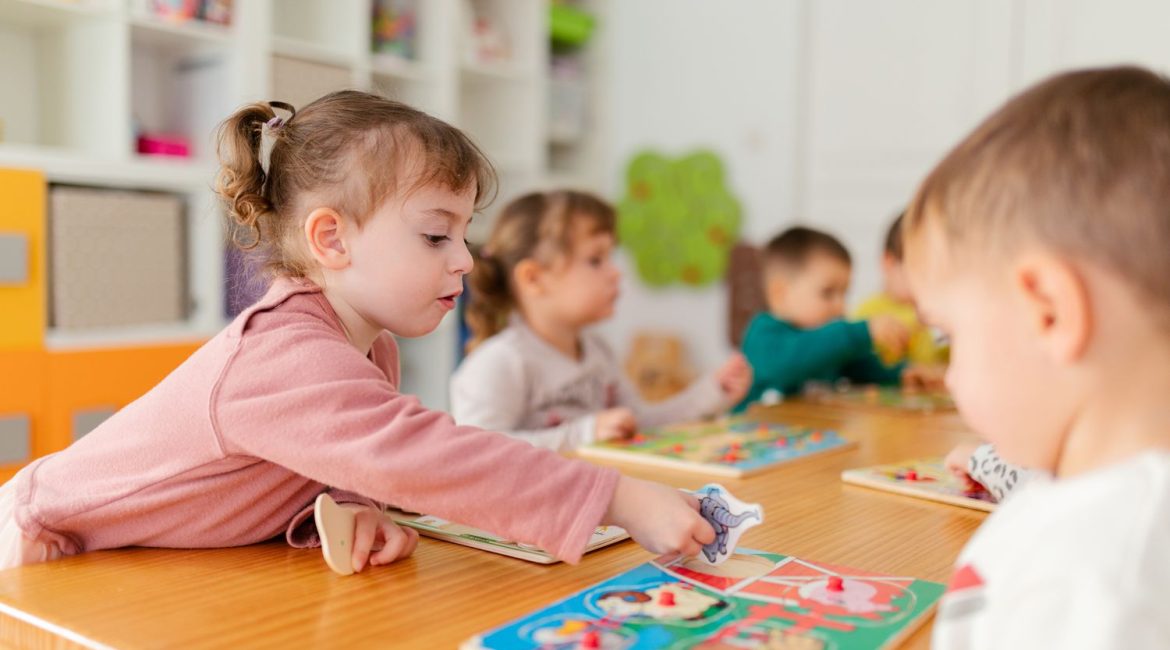
One of the key ways preschool supports brain development is through play-based learning. Activities such as puzzles, building blocks, storytelling, and interactive games encourage children to think, analyze, and solve simple problems. These playful exercises challenge the brain to remember patterns, recognize shapes, and connect ideas, which gradually improves memory and concentration.
Preschool environments also introduce children to routine and structured activities that support mental development. Daily schedules involving circle time, reading sessions, creative play, and group activities help children practice remembering instructions and following sequences. Over time, these small routines train the brain to organize information and improve recall abilities.
Another important benefit of preschool is the opportunity for social interaction and communication. When children interact with teachers and classmates, they learn to express ideas, listen to others, and understand different perspectives. Conversations, storytelling, and group discussions stimulate the brain, encouraging children to think creatively and develop stronger language and reasoning skills.
Hands-on learning is another powerful tool used in preschool education. Activities such as art, music, sensory play, and simple science experiments allow children to explore concepts in an engaging way. These experiences stimulate curiosity and encourage children to ask questions, make observations, and think critically about the world around them.
Teachers in preschool settings also play an important role in guiding children’s cognitive development. By asking questions, encouraging problem-solving, and supporting independent thinking, educators help children build confidence in their abilities. This guidance strengthens memory retention and helps children develop the habit of thinking through challenges rather than becoming discouraged.
Preschool also improves focus and attention span, which are essential for memory development. When children participate in guided activities, they learn to concentrate on tasks for longer periods of time. This ability to focus helps the brain process and store information more effectively, supporting both short-term and long-term memory growth.
In conclusion, preschool is much more than a place for children to play—it is a space where learning and development happen naturally. Through interactive activities, social engagement, structured routines, and supportive teaching, preschool helps children strengthen their memory, sharpen their thinking skills, and build confidence in their ability to learn. By turning play into progress, preschool prepares young minds for future academic success and lifelong curiosity.
Give your child the perfect start to learning with Nurturing Childcare in Edmonton, Canada, where play-based education helps build strong memory and thinking skills. Our preschool programs are designed to nurture curiosity, creativity, and confidence in every child. Contact Nurturing Childcare today and let your child learn, grow, and thrive in a supportive environment.